652c7bc0e6640eab567837f73f39865d

Monday, 23 January 2017

Sukanya Samriddhi Account / Yojana - at a glance


http://sapost.blogspot.in/

Sukanya Samriddhi Account / Yojana is a Small Savings Special deposit Scheme for girl child. This scheme is specially designed for girl’s higher education or marriage needs.

The Scheme launched for the welfare of the girl child, to save and educate the girl child.


·           Who can open the account? – Sukanya Samriddhi Account (or Khata) can be opened on a girl child’s name by her natural (biological) parents or legal guardian.

·           What is the Age limit? – SSA can be opened in the name of a girl child from the birth of the girl child till she attains the age of  10 years.  ( As per SB Order No. 2/2015 : The Girl child who is born on or after  02.12.2003 can open account upto 02.12.2015 )

·           How many accounts can be opened? – A depositor may open and operate only one account in the name of same girl child under this scheme. The depositor (or) guardian can open only two SSA accounts. There is one exception to this rule. The natural or legal guardian can open two or three accounts if twin girls are born as second birth or triplets are born in the first birth itself.

·           How to open a SSA account? Accounts in name of the girl child can be opened in post offices or in any branch of a commercial bank that is authorized by the Central Government to open an account under this scheme rules.

·          What is the minimum deposit to open the account? – The account may be opened with an initial deposit of one thousand rupees. The minimum contribution in any financial year is Rs 1000. Thereafter the contributions can in multiples of one hundred rupees.

·          What is the maximum deposit amount? – a minimum of one thousand rupees shall be deposited in a financial year but the total money deposited in an account on a single occasion or on multiple occasions shall not exceed Rs 1.5 Lakh in a financial year.

·          Deposits in an account may be made till the child completes fourteen years, from the date of opening of the account.

·           Is there any penalty? – If minimum (Rs 1000 pa) amount is not deposited, the account will be treated as an irregular account. This can be regularized/renewed on payment of Rs 50 per year as penalty. Along with this, the minimum specified subscription for the year (s) of default should be paid.

·          What is the mode of deposit? – The deposits in Sukanya Samruddhi scheme can be made in the form of Cash or Demand Draft or Cheque. Where deposit is made by cheque or demand draft, the date of encashment of the cheque or demand draft shall be the date of credit to the account. The cheque or DD should be drawn in favour of the postmaster of the concerned post office or the Manager of the concerned bank. The depositor (parents or guardian) has to write the account holder’s name (child’s name) and the account number on the backside of the instrument.

·          What is the Rate of Interest on Sukanya Samriddhi Account? – The applicable rate of interest on SSA for the financial year 2014-2015 is 9.1%. This is one of the highest rates of interest offered by Government on small savings scheme

·          Is interest rate fixed or variable? – The rate of interest is not fixed and will be notified by the central government on a yearly basis.
·           The account can be transferred anywhere in India if the girl shifts to a place other than the city or locality where the account stands.

·            Is Premature withdrawal allowed? – 50 % (half of the fund) of the accumulated amount in SSA can be withdrawn for girl’s higher education and marriage after she attains 18 years of age. The account’s balance at the end of preceding financial year is used for the calculation.

·           Can the girl child operate the account? On attaining age of ten years, the account holder that is the girl child may herself operate the account, however, deposit in the account may be made by the guardian or parents.

·          Is premature closure allowed? In the event of death of the account holder, the account shall be closed immediately on production of death certificate. the balance at the credit of the account shall be paid along with interest till the month preceding the month of premature closure of the account , to the guardian of the account holder.

·         The scheme would mature on completion of 21 years.

SSA Scheme Matures in 21 years or on Girl’s Marriage, whichever is earlier-
          The scheme gets matured on completion of 21 years from the date of opening of the account or as the girl child gets married, whichever is earlier. Please note that the girl attaining the age of 21 years has no relevance to maturity of this scheme.


·           Can the girl child continue the account after her marriage? – The operation of the account shall not be permitted beyond the date of the girl’s marriage.

·            What are the required documents to open Sukanya Samriddhi Account? – Birth certificate of the girl child has to be produced. The depositor (parents or guardian) has to submit his/her identity and address proofs.

·          On opening an account, the depositor shall be given a pass book. It will have date of birth of the girl child, date of opening of account, account number, name and address of the account holder and the initial amount deposited. The depositor has to present the passbook to the post office or bank at the time of depositing/receiving the interest/on maturity.


Tax Benefits on Sukanya Samriddhi Account Scheme


The amount that is deposited under Sukanya Samriddhi Account will be eligible for income tax exemption under Section 80C of Income Tax Act, 1961.

At present, only the contribution of up to Rs 1.5 lakh toward Sukanya Samridhi Yojana is eligible for tax deduction under Section 80C. But discussions are on to also exempt the interest income and withdrawal amount. We can expect a formal announcement on this in the coming Union Budget 2015-16.

(Issue of making interest income and withdrawal exempt from taxation can be done by Department of Revenue (DoR) through legislative amendments. The matter is under examination of DoR)

Sukanya Samriddhi Account ( SSA ) deposits eligible for deduction u/s 80C of Income Tax Act, 1961 : Click Here

Sukanya Samriddhi Account vs Public Provident Fund (PPF)

Both Sukanya Samriddhi Account (SSA) and Public Provident Fund (PPF) aims to seed the savings habit but both schemes have their own pros and cons.

Stressing on the girls role in making the India competitive and prosperous nation, Prime Minister Shri Narendra Modi has today launched a new small savings account for the girl child “Sukanya Samriddhi Account” as an integral part of the “Beti Bachao-Beti Padhao” campaign.

Sukanya Samriddhi Account was initially introduced by Shri Arun Jaitely in his maiden budget speech but has been officially launched today by Prime Minister Shri Narendra Modi. He has handed over bank account details to five girls under the “Sukanya Samridhi Yojna” (girl child prosperity scheme).

Sukanya Samridhi Yojna is a special deposit scheme for girl child only but one another popular scheme to benefit child (irrespective of girl or boy) is Public Provident Fund (PPF).

Let’s see the difference between Sukanya Samriddhi Account and Public Provident Fund (PPF)

Points of Difference
Sukanya Samriddhi Account (SSA)
Public Provident Fund (PPF)
For whom
Only for Girl Child.
For every Indian Citizen.

Age Limit
From the birth till she attains age of 10 years.
No age limit.


By whom
By the girl child who has attained the age of 10 years or by the natural or legal guardian.
By the Individual but by the natural or legal guardian for the minor child.

Where to open
Post office and nationalized banks but not   private banks.
Post office and nationalized banks, including private banks.


Number of Account
One account for each girl child, maximum up to 2 or 3 accounts if twin girls are born in the second birth or triplets are born in the first birth.
Each Individual can hold only one account in   his name.

Minimum Contribution
    Rs.1,000
Rs.500

Maximum Contribution
   Rs.1.5 lakhs in all accounts.
Rs.1.5 lakhs in all accounts.
Interest Rate
9.1% per annum for fiscal year 2014-15.
8.70% per annum for fiscal year 2014-15.

Tax Benefit on the Contribution
Contributed Amount will be deductible u/s 80C.

Tax Benefit on the interest earned
At present no tax benefit is announced for the interest earned. A mere sum of Rs.1,5o0 will be deductible u/s 10(32) .
Interest Earned is tax free under PPF.

Time Period of contribution
Minimum tenure of contribution is 14 years from the date of opening of account.
Minimum 15 years and then in blocks of 5 years.


Maturity
21 years from the date of opening of account.
15 years from the fiscal year of opening of account.


Penalty
Rs.50 per year if minimum contribution is not made.

Mode of Deposit
Cash or Demand Draft or Cheque


Premature Withdrawal
Allowed up to 50% for the girl’s higher education and marriage after she attains 18 years of age
No premature withdrawal is allowed except in case of death of the account holder.


Loan
No loan can be taken on the SSA balance.
Loan can be taken from the third year of opening of account to the sixth year.
Taxation on Maturity
No tax will be levied on the maturity amount.

Note:

1.      Interest rate under both the schemes will be notified each year by the Government.
2.      Interest will be compounded yearly under both schemes.
3.      Loan on the PPF balance is restricted to 25% of the balance at the end of 2nd year.
4.      At present interest earned on SSA account is taxable in the hands of guardian but it may get tax rebate in the upcoming budget.
5.    Contributed amount get deduction u/s 80c up to Rs.1.5 lakhs including all other eligible investments.


Sukanya Samriddhi Calculator
Year
Age of Girl Child
Opening Balance
Monthly Contribution
Yearly Contribution
Intrest Rate @9.1%
Closing Balance
2015
1
-
1000
12,000
592
12,592
2016
2
12,592
1000
12,000
1,737
26,329
2017
3
26,329
1000
12,000
2,987
41,316
2018
4
41,316
1000
12,000
4,351
57,668
2019
5
57,668
1000
12,000
5,839
75,507
2020
6
75,507
1000
12,000
7,463
94,969
2021
7
94,969
1000
12,000
9,234
116,203
2022
8
116,203
1000
12,000
11,166
139,369
2023
9
139,369
1000
12,000
13,274
164,643
2024
10
164,643
1000
12,000
15,574
192,217
2025
11
192,217
1000
12,000
18,083
222,300
2026
12
222,300
1000
12,000
20,821
255,121
2027
13
255,121
1000
12,000
23,808
290,929
2028
14
290,929
1000
12,000
27,066
329,995
2029
15
329,995
-
-
30,030
360,024
2030
16
360,024
-
-
32,762
392,787
2031
17
392,787
-
-
35,744
428,530
2032
18
428,530
-
-
38,996
467,526
2033
19
467,526
-
-
42,545
510,071
2034
20
510,071
-
-
46,416
556,488
2035
21
556,488
-
-
50,640
607,128


Maturity Value :
Amount of Deposit : 14 Years x 12 Months x Rs. 1000 = 1,68,000 + Interest= 4,39,128 = 6,07,128 ( Approximately

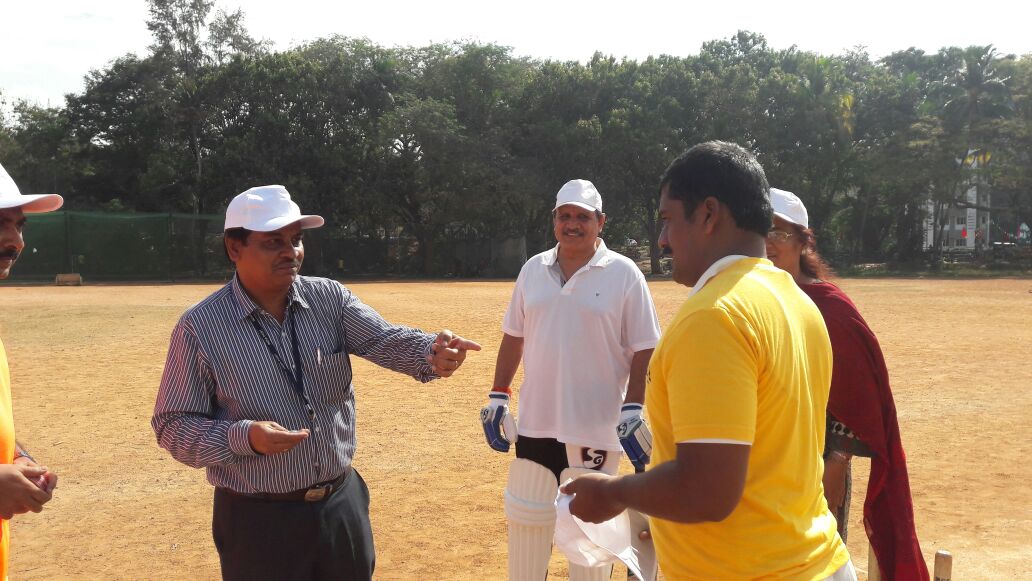
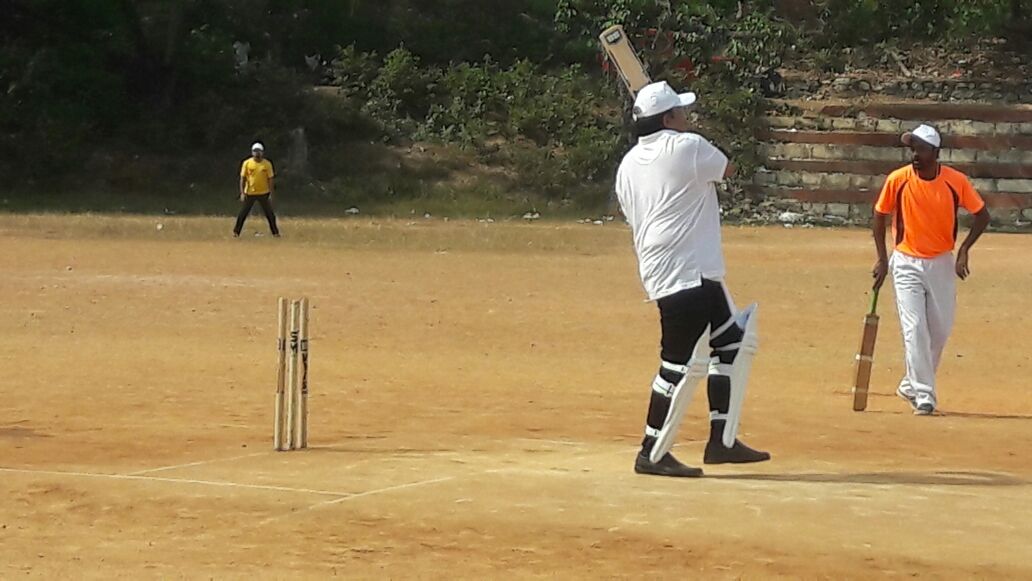
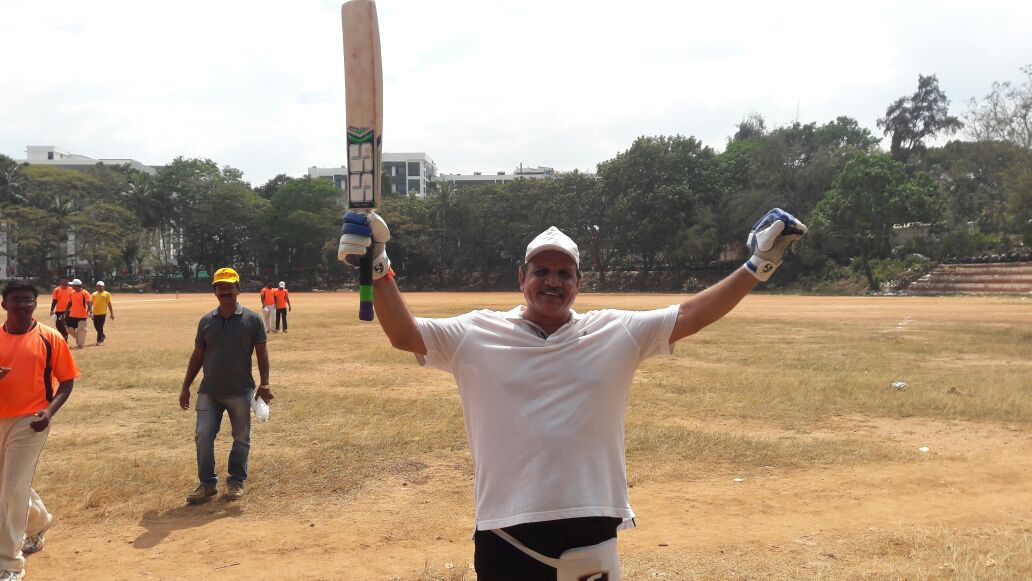
Cricket match with the Hon'ble Secretary (P) Sri B V Sudhakar held at Trivandrum Medical College on 22.1.2017 (Sunday)


Getting ready


Toss by Sri Thomas Lourdraj DPS (HQ)

Hon'ble Secretary (Posts) Sri B V Sudhakar

Smt Anjali Anand CPMG with Sri Alexin George SSPOs Kottayam

Super shot

Man of the Match


The umpire Sri P Sivakumar IP RMS 'TV' Division alongwith the Hon'ble Secretary (P)

Winners

Amended I-T law harsh, prone to misuse by taxmen: Experts

As the dust begins to settle on demonetization and the taxman hunts for unexplained money, there is a lurking concern among practitioners and senior levels of the tax office as to how harshly the new law would be used. 

Money borrowed from a friend, jewellery inherited from great grandmother, gifts, capital received by a small businessman, amount spent in daughter's wedding or in regular household expenditure can be questioned and taxed at a far higher rate if someone fails to offer a "satisfactory explanation" to the tax officer. 

Indeed, a person may have to cough up as high as 83% -- as against 35% in the past -- if the I-T department doubts such 'income' or 'expenses'. 

"We have discussed the matter among ourselves. It's a strong provision in the (Income Tax) Act and the department would find it handy in mobilising tax from black money. But there are chances that it may be misused," said a senior tax official in Mumbai which accounts for the highest direct tax collection. According to senior chartered accountant Dilip Lakhani, in a loan received the assessing officer can always question the credit worthiness of the lender or describe family jewellery (beyond 500 gms) as unexplained investment. 

This year, the government decided to advance the Union Budget presentation to February 1, doing away with a decades-old practice of presenting it on the last working day of February. Prime Minister Narendra Modi had said that this would allow for the Finance Bill to be passed early and make funds available on time.

The Opposition parties had sought postponement of the Budget on the grounds that the ruling government could announce sops for the states in line for elections and sway the votes.

While dismissing the petition, filed by Manohar Lal Sharma, the Supreme Court said, "There is no illustration to support that the presentation of the Union Budget would influence voters' mind in state elections."

Sunday, 22 January 2017

PNB to provide technology platform for pilot launch of IPPB

State-owned Punjab National Bank (PNB) today said it will provide technology platform for pilot launch of India Post Payments Bank (IPPB).

PNB & IPPB

The memorandum of understanding (MoU) in this regard was signed between PNB and IPPB yesterday.

As per the agreement, PNB shall provide technology platform for pilot launch of IPPB on receipt of regulatory approval from Reserve Bank of India, the bank said in a regulatory filing to stock exchanges. 

IPPB last year received certificate of incorporation from the Registrar of Companies, setting the stage for the new bank to begin operations during 2017. 

The bank will be headquartered in New Delhi and plans to launch 650 branches across the country during the year. The first PSU under the Department of Posts, IPPB expects to complete the rollout of its branches all over the country by September 2017. 

IPPB aims to become the most accessible bank in the world, riding on advanced banking and payments technology. Coupled with physical presence across 1.55 lakh post offices and the reach of the postman, it plans to become a powerful and effective vehicle of real financial inclusion in the country.

Source:- Business Slandered

GPF INTEREST RATE @ 8% FROM 1st JAN 2017 - LATEST ORDER

CCS (CCA) Rules, 1965 - Clarification regarding effect of warning, censure etc on promotion

Thursday, 19 January 2017

7th Pay Commission: Centre Directs States to Imply Recommendations Coming March

The centre today urged various States to implement the recommendations made by the 7th Pay commission for pay hikes in salaries and pensions coming this March. Although, the Union Cabinet did not much give a merry news earlier at the star of the new year as the revised salaries got delayed. But in a recent notification provided by the Centre, it has been stated that the Finance Ministry wants all the pledged States may imply the recommendation in every plausible way henceforth not affecting any of the autonomous body.

We earlier reported that the autonomous bodies are most likely not to get affected thus urging the organisations to work out with their affairs in such a way that it may not hamper functions and put an extra burden on the central chequer. Also, the administrative ministries concerns will be taken into consideration thus keeping such cases under recommended pay scale as well as being justified on the basis of functional procedures and recruitment qualification.

Till date, most of the States have nodded in favour of implementing 7th pay commission recommendation, but the date has not been finalised yet. So, the urge to close the date in an official manner by the end of March may help lakhs of Central Government employees and pensioners a breath of relief. Jammu & Kashmir being the first in the .list to agree with Honourable PMs effort was followed by Uttarakhand, Haryana, Uttar Pradesh and Goa.

Seeking proper salary for almost 58 lakhs employees, excluding pensioners, the respective recommendation suggests minimal hike of 14.27% in basic salary, however, the lowest in the past 70 years. As the previous government recommended a minimum of 20% hike in basic salary under the 6th pay commission which was favourably doubled up when the present government came to power in 2008.

The central government employees, on the other hand, have announced a day strike on February 15, 2017, with all force to enable the previously promised pay hikes in the basic pay. Though, with demonetisation probe going on across the nation, the Centre may face a good amount of economic cost which ought to be given to each State before implying the recommendations by 7th pay commission.

Meanwhile, States who have not yet agreed on implying recommendations, but still moving ahead with the new norms set by 7th pay panel tend to face strict offences as Punjab University, which going through a financial crisis hiked its fees of few courses by 12% to 13% whereas rest of traditional courses by 5% to 6%. The government issued a notice of bearing at least 30% of the fiscal liability aroused due to pay hike as per the recommendations.

Source : http://fabnewz.com/

Government may lower limit for quoting PAN number for cash transactions

Unwilling to lose the momentum it gained for a less-cash economy after demonetisation and restrictions on cash withdrawals, the government may announce big disincentives in the upcoming Budget for usage of cash. 

Sources revealed to ET Now that the upcoming budget could come up with a series of such big disincentives. 

The government may reduce threshold for quoting PAN card for cash transactions, say sources. 

The threshold, which is Rs 50,000 now, may be brought down to Rs 30,000 to bring more transactions within formal economy. Sources say the threshold for quoting PAN Card details for merchant transactions can also be reduced. 

In addition to these steps, the government may also announce cash-handling charges for cash payments above a certain limit. 


The move is part of the government's efforts to tighten the noose around people who deal in large cash transactions. 

In fact, the threshold for quoting PAN Card details for merchant transactions could also be brought down from current Rs 2 lakh. With Aadhaar now having the government's legal backing, the usage for Aadhar card may also be made mandatory as an alternative for people not having PAN card. 

In addition to these steps, the government may also announce cash-handling charges for cash payments above a certain limit. 

Sources have told ET Now that a levy could be in the works for cash transactions over Rs 1 lakh. 

"The scale of the implicit cost of transacting in cash is not fully understood. We are of the opinion that licencing authorities including government agencies should levy a cash handling charge for payments in cash above a certain threshold. The cash handling charge so collected should be exclusively used to fund new infrastructure for accpeting digital payments (like POS devices)," a source said. 

The move is aimed at moving from a less-cash to a cashless society post the demonetisation drive that was brought into effect by PM Modi on November 8. 

These measures will help the government stay on track towards a less-cash economy as there are concerns that easing of cash-withdrawal limits at banks and ATMs might take the economy back to pre-demonetisation prevalence of cash. 

Also, these steps may seem necessary to promote a less-cash economy as digital payments cannot be encouraged through apps and PoS alone due to the poor state of infrastructure and lack of digital literacy in the country.

Source : The Economic Times

Grant of Transport Allowance at double the normal to deaf and dumb employees of Central Government – Finmin Orders

“Transport Allowance at double normal rates would be admissible to the ‘Hearing Impaired employees having loss of sixty decibels or more in the better ear in the conversation range of frequencies’ as per Persons With Disabilities (Equal Opportunities, Protection of Rights and Fun Participation) Act, 1995”


No.20/2/2016-E-II(B)
Governmént of India
Ministry of Finance
Department of Expenditure
North Block, New Delhi
Dated: 17.01.2017
OFFICE MEMORANDUM

Subject: Grant of Transport Allowance at double the normal to deaf and dumb employees of Central Government

In supersession of this Department O.M.No.21(2)/2011-E-II(B) dated 19.02.2014 regarding admissibility of Transport Allowance at double the normal rates to employees who are deaf and dumb. the undersigned is directed to say that the matter has been re-examined and it has been decided with the approval of Competent Authority that Transport Allowance at double the normal rates is admissible to Hearing Impaired employees also in addition to employees who are both deaf and dumb.

2. Transport Allowance at double normal rates would be admissible to the ‘Hearing Impaired employees having loss of sixty decibels or more in the better ear in the conversation range of frequencies’ as per Persons With Disabilities (Equal Opportunities, Protection of Rights and Fun Participation) Act, 1995.

3. The admissibility of Transport Allowance at double the normal rates to above categories of employees is subject to recommendation of the Head of ENT Department of a Government Civil Hospital and fulfilment of other conditions applicable in respect of other disabilities mentioned in D/o Expenditure’s O.M. No. 19029/1/78-E-lV (B) dated 31st August, 1978 read with dated 29.08.2008.

4. In so far as the persons serving in the Indian Audit and Accounts Departrnent are concerned, this order issues in consultation with the Comptroller And Auditor General of India.

5. These orders would be effective from 19.02.2014.

6.  Hindi version is attached.

(Nirmala Dev)
Deputy Secretary (EG)


Authority: www.finmin.nic.in

Cabinet approves the repealing of the obsolete and redundant laws

Press Information Bureau
Government of India
Cabinet
18-January-2017 15:23 IST

Cabinet approves the repealing of the obsolete and redundant laws 

The Union Cabinet chaired by the Prime Minister Shri Narendra Modi has given its approval for introduction of the Repealing and Amending Bill, 2017 to repeal 105 Acts.

Background:
The two Member Committee constituted by the PMO, the Law Commission of India and the Legislative Department identified 1824 redundant and obsolete Central Acts for repeal. After careful examination and consultation with various Ministries/Departments in the Government of India, four Acts have been enacted to repeal 1175 Central Acts (during the period May, 2014 to August, 2016) by Parliament which are –

i) The Repealing and Amending Act, 2015 (17 of 2015) repealing 35 Acts; The Repealing and Amending (Second) Act, 2015 (19 of 2015) repealing 90 Acts;

ii) The Appropriation Acts (Repeal) Act, 2016 (22 of 2016) repealing 756;

iii) Appropriation Acts including Appropriation (Railways) Acts;

iv) The Repealing and Amending Act, 2016 (23 of 2016) repealing 294 Acts.

Out of the aforesaid 1824 Acts, 227 Acts (including Appropriation Acts enacted by Parliament for the States under President's Rule) are identified to be repealed by State Governments have been requested to take necessary action to repeal them.

A list of remaining 422 Central Acts was circulated among all the Ministries/ Departments for their comments on repeal of Acts pertaining to their respective Ministries/Departments. Till date, 73 Ministries/Departments including Legislative Department have given their comments whereby they have agreed to repeal 105 Acts and disagreed to repeal about 139 Acts. On the basis of the comments/concurrence received from the Ministries/Departments, 105 Acts have been identified for repeal by this Department.

Looking to save tax on House Rent Allowance? Here's all you need to know

For most employees, House Rent Allowance (HRA) is a common component of their salary structure. Although it is a part of the salary, HRA, unlike basic salary, is not entirely taxable. Subject to certain conditions, a part of HRA gets exempted under Section 10 (13A) of the Income-tax Act. 

The amount of HRA exemption is deductible from the total income before arriving at a taxable income. This helps the employee in saving tax. Remember, the HRA received is fully taxable if an employee is living in his own house or if he does not pay any rent. 

Who can avail HRA? 

The tax benefit on HRA is available only to a salaried individual who has the HRA component as part of his salary structure and is staying in a rented accommodation.Self-employed professionals cannot avail the deduction. 

How much is exempted? 


The exemption for HRA benefit is the minimum of: 
i) Actual HRA received 
ii) 50% of salary if living in metro cities, or 40% for non-metro cities; and 
iii) Excess of rent paid annually over 10% of annual salary 

For calculation purpose, the salary considered is 'basic salary'. In case 'Dearness Allowance (DA)' (if it forms a part of retirement benefits) and 'commission received on the basis of sales turnover' is applicable, they too are added to compute the minimum HRA exemption available. 

The tax benefit is available to the person only for the period in which the rented house is occupied. 

Example of HRA calculation 
Let's say an individual, with a monthly basic salary of Rs 15,000, receives HRA of Rs 7,000 and pays Rs 8,400 rent for an accommodation in a metro city. The tax rate applicable to the individual is 20 percent of his income. 
To avail HRA benefit, the least of the following amount (yearly) is exempted, rest is taxable: 
i) Actual HRA received = Rs 84,000 

ii) 50% of salary (metro city) = Rs 90,000 (50% of Rs 1,80,000) 

iii) Excess of rent paid annually over 10% of annual salary = Rs 82,800 (Rs 1,00,800 - (10% of Rs 1,80,000)) 

It shows that of Rs 84,000 actually received as HRA, Rs 82,800 gets tax exemption and only the balance of Rs 1,200 gets added to the employee's income, on which a tax of Rs 240 ( 20 per cent slab ) gets payable. 

Documents 

HRA exemptions can be availed only on submission of rent receipts or the rent agreement with the house owner. 

It is mandatory for the employee to report the Pan Card of the 'landlord' to the employer if the rent paid is more than Rs 1,00,000 annually, or if it exceeds Rs 15,000 per month. 

Special cases 

There could be special scenarios in claiming HRA tax benefit, such as: 

1. Paying rent to family members 

The rented premises must not be owned by the person claiming the tax exemption. So if you stay with your parents and pay rent to them then you can claim that for tax deductions as HRA. However, you cannot pay rent to your spouse. As, in the view of the relationship, you are supposed to take the accommodation together. Thus, these transactions can invite the scrutiny from the Income -tax Department. 

2. Own a house, but staying in a different city 

One can avail the simultaneous benefit of deduction available for the home loan against 'interest paid' and 'principal repayment' and HRA in case your own home is rented out or you work in another city. 

Individuals who don't get HRA but pay rent 
There may be some employees who might not have HRA component in their salary structure. Also, a non-salaried individual might be paying rent. For them, Section 80 (GG) of the Income-tax Act offers help. 

An individual paying rent for a furnished/unfurnished accommodation can claim the deduction for the rent paid under Section 80 (GG) of the I-T Act, provided he is not paid HRA as a part of his salary by furnishing Form 10B. 

How much 
The least of the following is available for exemption from tax under Section 80GG: 
(i) Rent paid in excess of 10% of total income 
(ii) 25% of the total of the total income* 
(iii) Rs 5,000 per month 

*Under this section, the total income is calculated as gross total income minus long-term capital gains, the short-term capital where Securities Transaction Tax (STT) has been paid and deductions under Sections 80C to 80U, except Section 80GG. 

Conditions 
While claiming a tax deduction, one must remember that the individual himself or his/her spouse, or minor child, or as a member of the Hindu Undivided Family (HUF) must not own any accommodation. Also, if the individual owns any residential property at any place and earns rent from it then no deduction is allowed. 

One can avail the simultaneous benefit of deduction available for the home loan against 'interest paid' and 'principal repayment' and HRA in case your own home is rented out or you work in another city. However, the same is not available in case of Section 80GG. 

Source:-The Economic Times (With inputs from Sunil Dhawan)

31st All India Postal Volleyball Tournament at Visakhapatnam from 18 to 21-1-2017

Today, 31st All India Postal Volleyball Tournament for the year 2016-17 inaugurated at Rajiv Gandhi Port Indoor Stadium Visakhapatnam by the AP Volleyball Association President and Visakha West MLA Shri P. Ganga Banu. 177 National and International level players from 14 postal circles are participating in the tournament. Shri M. Sampath CPMG AP Circle, Shri E. V. Rao, DPS, Visakhapatnam Region and other VIP dignitaries were also present. Last All India Tournament held at Shimla was won by Karnataka by beating Rajasthan in tough match. Valedictory function will be held on 21-1-2017 in which AU VC Prof G. Nageswara Rao and volleyball coach Dronacharya awardee A. Ramana Rao would participate as guests.

Seventh Central Pay Commission’s recommendations -amendment of Service Rules/Recruitment Rules-Dopt

No .AB-14017/13//2016-Estt(RR)-Pt
Government of India
Ministry of Personnel P.G & pensions
Department of Personnel and Training
***

North Block, New Delhi
Dated:18.01.2017

OFFICE MEMORANDUM

Subject : Seventh Central Pay Commission’s recommendations -amendment of Service Rules/Recruitment Rules

The undersigned is directed to refer to this Departments OM No AB.14017/61/2008-Estt. (RR) dated 24/03/2009 regarding amendment of Service Rules/ Recruitment Rules in pursuance of Sixth Pay Commission’s recommendations. The revised pay structure recommended by 6 thCPC and approved by the Government included a number of ‘merged grades’ with a common Pay Band and Grade Pay.

2.             In order to regulate the service rendered in the pre-revised scale where there have been merger of more than one grade into one with a single grade pay, it was advised that a Note to the following effect may be inserted under relevant columns in the Schedule of RRs and under relevant provisions in Service Rules.

                 “Note: For the purpose of computing minimum qualifying service for promotion, the service rendered on a regular basis by an officer prior to 1.1.2006/the date from which the revised pay structure based on the 6th CPC recommendations has been extended, shall be deemed to be service rendered in the corresponding grade pay/pay scale extended based on the recommendations of the Commission. For purposes of appointment on deputation/ absorption basis, the service rendered on a regular basis by an officer prior to 1.1.2006/the date from which the revised pay structure based on the 6th CPC recommendations has been extended, shall be deemed to be service rendered in the corresponding grade pay/pay scale extended based on the recommendations of the Commission except where there has been merger of more than one pre-revised scale of pay into one grade with a common grade pay/pay scale, and where this benefit will extend only for the post(s) for which that grade pay/pay scale is the normal replacement grade without any upgradation.”

3.          It has been observed that after implementation of 7th CPC there are only a few cases of merger/upgradation of pay scale. However in cases where merger/ upgradation of pay is recommended in the 7th CPC and the same has been accepted, there is a need to provide a Note on similar lines as above with relevant changes i.e. the date 1.1.2006 needs to be replaced with 1.1.2016 and “6th CPC” is to be replaced with “7th CPC”. In other cases the Note as referred
above need not to be prescribed in the RRs/SRs where no merger/ upgradation are
involved as per 7th CPC recommendations.


(G. Jayanthi)
Director(E-I)

Source : http://document.ccis.nic.in/WriteReadData/CircularPortal/D2/D02est/7CPC-Amendment-18012017.pdf